


 By Dr. Keerthi Sudireddy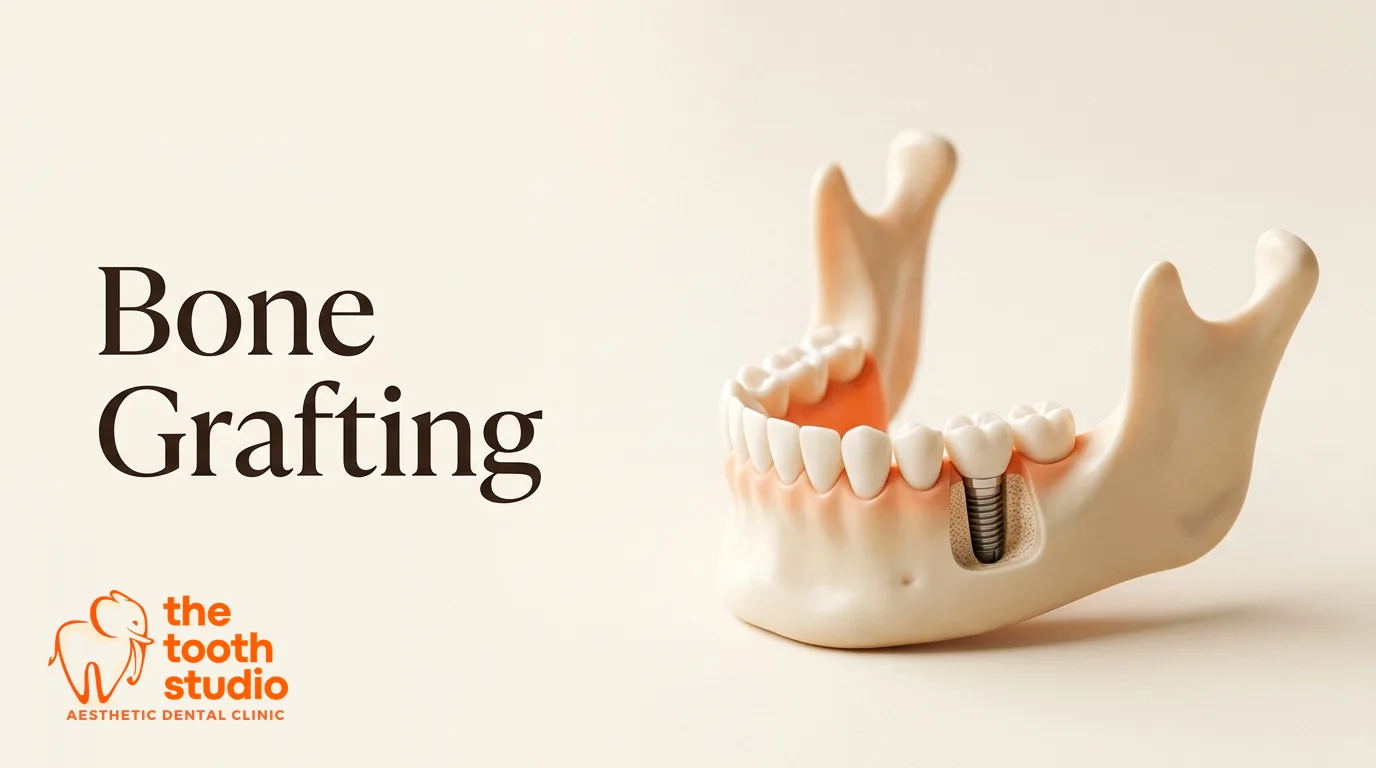
Dental implants need enough healthy bone to anchor into. When bone has shrunk after tooth loss, a bone graft rebuilds the foundation so an implant can succeed.
Bone grafting adds bone material to areas where the jaw has thinned, usually after long-standing tooth loss, so an implant has enough support. It is a common, predictable procedure done under local anaesthesia. After grafting, healing takes a few months before the implant is placed. Not everyone needs it - a 3D scan shows whether your bone is sufficient.
Why bone is lost
When a tooth is missing, the bone that held it gradually shrinks because it is no longer stimulated by chewing. The longer a tooth is gone, the more bone can be lost. This is why replacing teeth sooner is better.
What the procedure involves
- Bone material is placed into the deficient area under local anaesthesia.
- It acts as a scaffold for your body to grow new bone.
- Healing takes a few months before the implant is placed.
Do you need it?
Only a 3D scan can tell. Techniques like All-on-4 often avoid grafting, and acting before bone is lost helps too. See implants years after tooth loss.
Find out your options at The Tooth Studio.
Have a question about your smile?
Book a consultation with Dr. Keerthi Sudireddy, or get free guidance on WhatsApp.