


 By Dr. Keerthi Sudireddy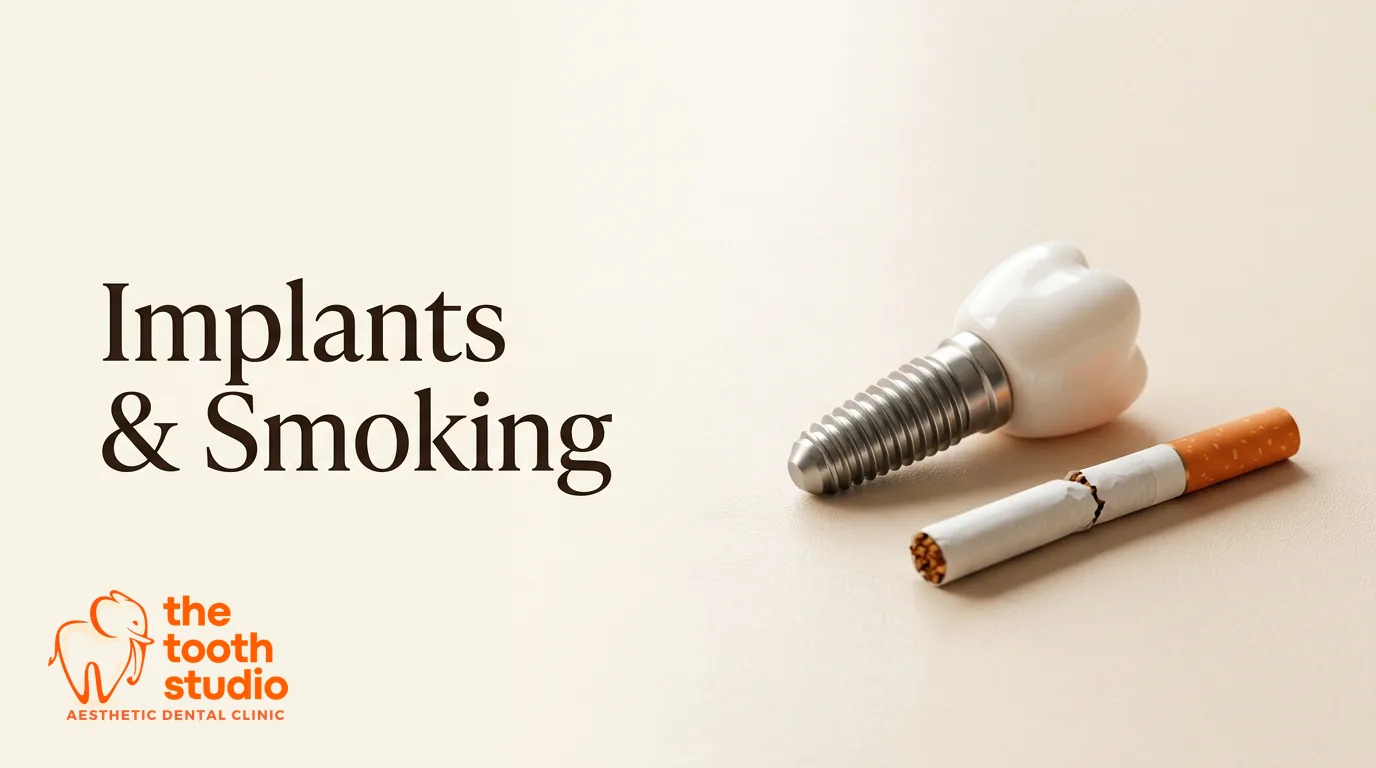
Smoking is one of the biggest risk factors for dental implant problems. It does not always rule out implants, but it changes the odds, and quitting around treatment makes a real difference.
Smoking reduces blood flow to the gums and bone, slowing healing and raising the risk of infection and implant failure. Smokers can still get implants, but success rates are lower than for non-smokers. Stopping smoking before surgery and during healing significantly improves the outcome, so even a temporary pause helps.
How smoking affects implants
- Reduced blood flow slows healing and bone fusion.
- Higher risk of infection and peri-implantitis.
- Greater chance of early and late implant failure.
Can smokers get implants?
Yes, but with a frank discussion of the higher risk. Many smokers have successful implants, especially when they reduce or pause smoking around treatment and maintain excellent hygiene.
What helps
- Stop smoking at least a week or two before surgery if possible.
- Avoid smoking during the healing period.
- Keep up meticulous cleaning and maintenance visits.
Get honest, supportive guidance at The Tooth Studio. See how smoking affects teeth.
Have a question about your smile?
Book a consultation with Dr. Keerthi Sudireddy, or get free guidance on WhatsApp.